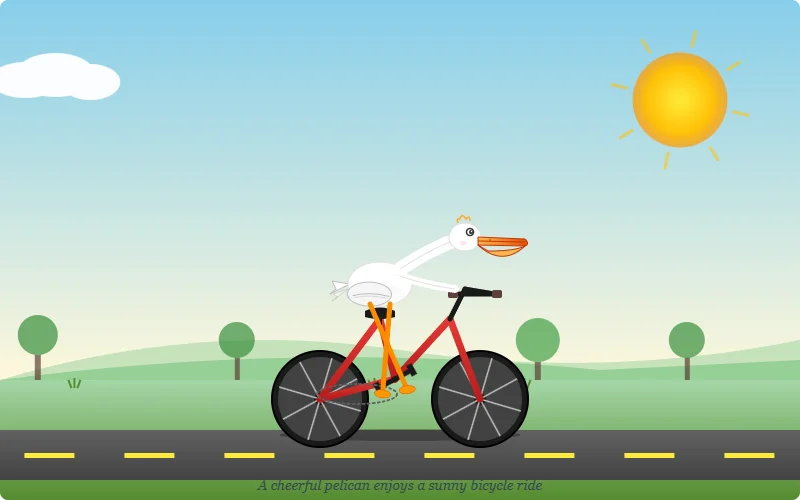
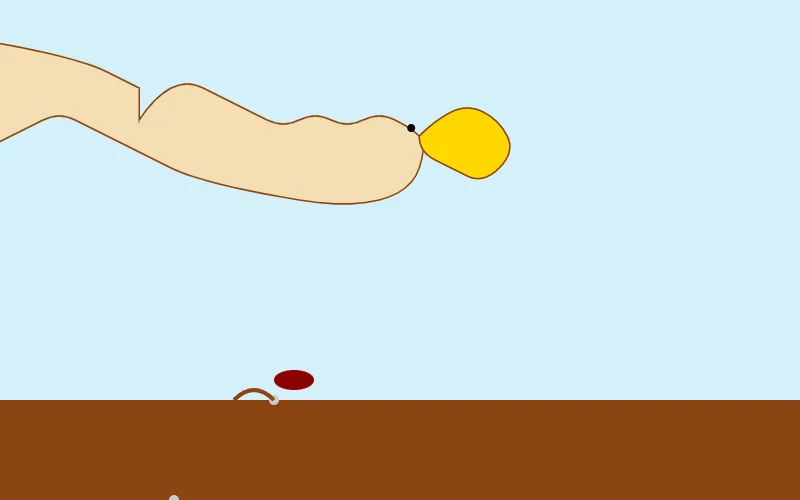
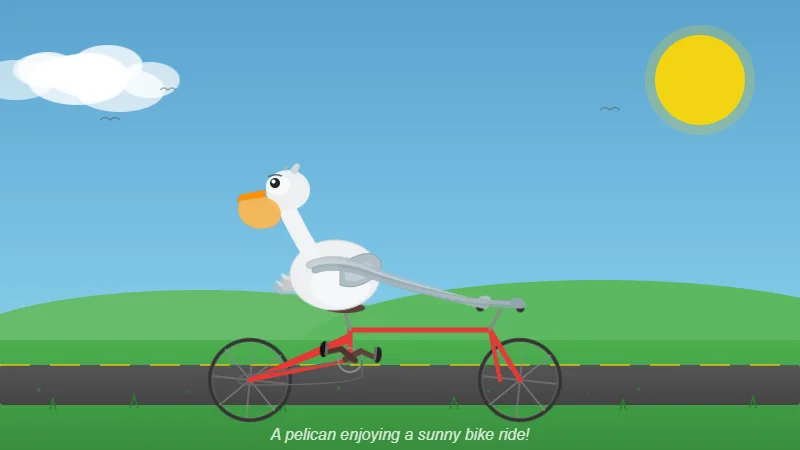
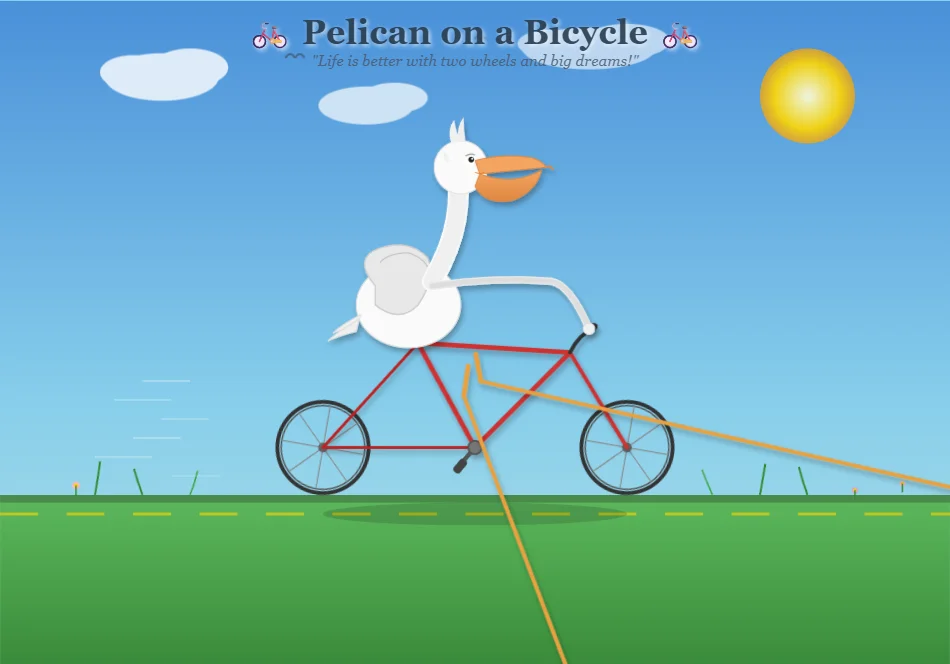
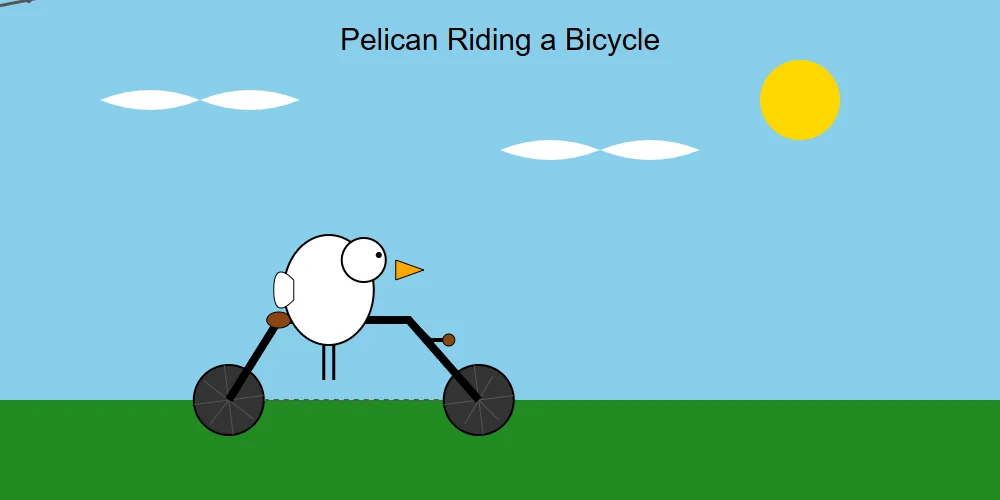
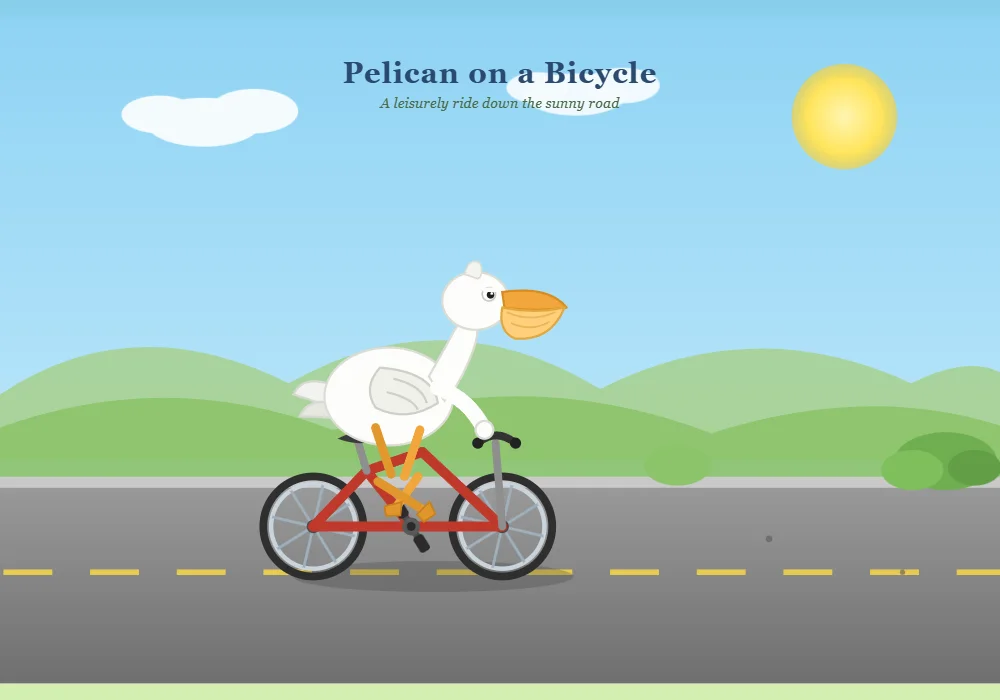
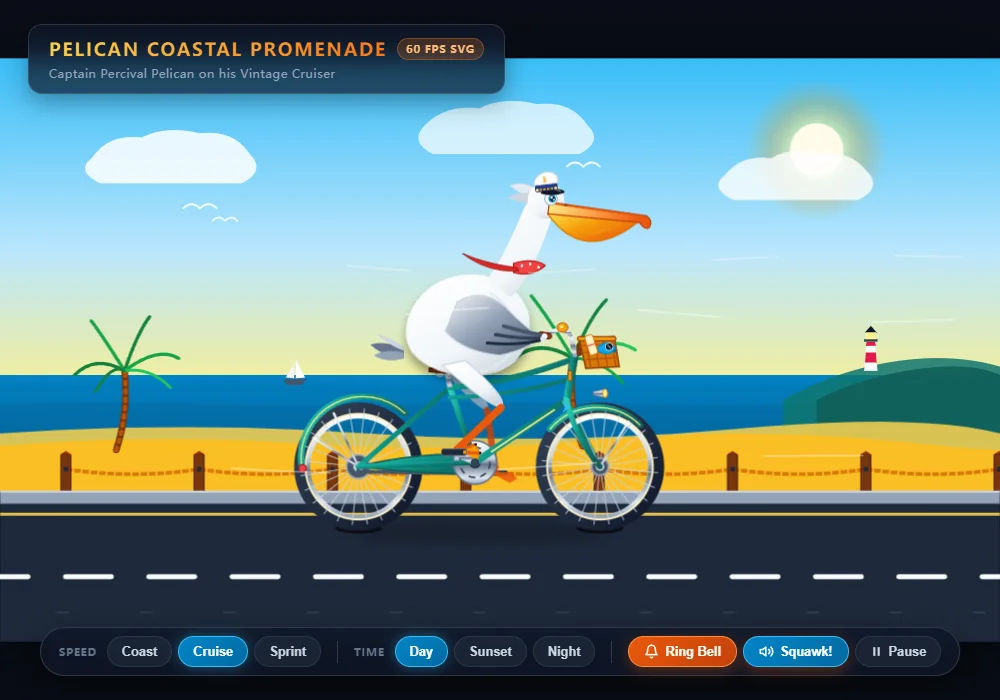
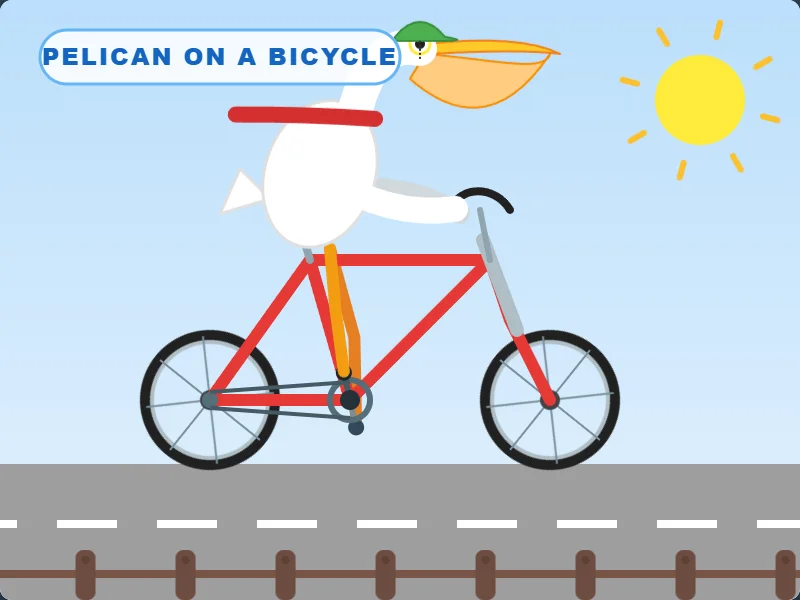
37 saved animations for a pilot study of physical-world representation. Inspect visual quality, object attachment, scene consistency and time as separate dimensions of the result.
31 model / setting groups · 37 saved programs · 25 model labels
The actual programs, running in your browser. One result per model and setting is shown first. Expand a group to see its other saved outputs. Visible programs play automatically; their original controls remain active.
Recorded model labels are retained; they are not verified backend identities. Original geometry and animation faults remain. The first saved entry is a browsing default, not a selected winner. Methods and missing outputs ↓
Do not load persistent memories or call subagents. Create an HTML file containing a 2D SVG animation of a pelican riding a bicycle. Output the complete, self-contained HTML source directly in your final response, without Markdown code fences or explanations. Do not call tools, read files, load skills, access the network, or write files. The caller will save your final response. All visible text in the animation, including titles, labels, and captions, must be in English. Set the HTML document's lang attribute to en.
JavaScript places opposing pedals and solves two-segment legs; nominal wheel and crank periods are 1.2 and 2.4 seconds. Separate CSS clocks move road dashes, foam and scenery.
The bicycle and rider already have a translation, then receive another additive translation. That doubled placement moves them below the scene; generated spokes also include the parent offset again.
SVG rotations give the wheels a nominal 0.7-second period and the crank 1.2 seconds. The legs interpolate through hand-written path shapes on the crank's clock, rather than solving joint geometry.
Wheels and crank each rotate once per nominal 0.6 seconds. Opposite leg groups swing through 50 degrees, while road markings move 100 units every 0.4 seconds on a separate clock.
The wheels and crank use the same nominal 0.8-second rotation period. Leg endpoints only oscillate vertically by a few units, so their motion does not follow the crank's circular pedal path.
A 19:8 sprocket-radius ratio converts crank speed into wheel speed, then wheel radius sets ground speed. Two-segment legs follow opposing pedals, but the visible chain remains static.
Wheels rotate every nominal 2.4 seconds and the crank every 1.6 seconds. Both visible chain strands animate their dash offset from 0 to -11, giving them the same travel direction.
Wheel spokes use a nominal 1.4-second rotation; the crank and interpolated leg paths use 2 seconds. Counter-rotating pedal blocks stay level while road dashes scroll 120 units per second.
Wheels, crank and leg-path morphs share a nominal 0.9-second loop. The legs interpolate only a few poses; there is no moving chain in this saved LOW output.
Two crank-arm lines omit their start coordinates, so they run from the scene origin (0, 0) to the moving pedals. Local leg calculations and shared-speed updates coexist with this visible attachment failure. The chain also wraps at 12 units despite its 10-unit dash period.
The update adds two units per animation frame. Bicycle translation uses x directly, while the bird's translation is inside a 0.8 scale, so their horizontal motion separates instead of keeping the rider attached.
CSS gives wheels and pedals a nominal 0.8-second cycle, with the two pedal phases 180 degrees apart. Ground texture moves 200 units over 2 seconds independently of that rotation.
Two 1,241-degree, 10-second rotations are children of the bicycle group rather than the separate wheels. They rotate the assembled bicycle about wheel-center pivots instead of spinning each wheel in place.
Wheels and crank turn on a nominal 2-second CSS cycle. Each leg swings between -30 and 30 degrees with small translations; those independent transforms do not bind the foot to a pedal endpoint.
Wheels and crank share a nominal 1-second period. Leg endpoints linearly interpolate four quarter-turn positions, tracing straight segments between them while the crank rotates continuously.
The only animation is a 4-second translation attached directly to the root SVG. It moves the whole scene, including the background, rather than animating wheel rotation or pedalling.
The front wheel and crank rotate on nominal 2-second CSS cycles, but the rear-wheel group has no spin animation. The bird bobs separately while ground strokes slide 200 units over 4 seconds.
Boardwalk layers move left and the two chain strands travel in opposite directions. Wheels use a nominal 1-second loop, while cranks and leg-path morphs use 1.4 seconds; these clocks are specified separately.
Two-segment leg geometry follows pedals separated by half a turn. Road-dash offset decreases by 85 every 0.55 seconds, sending the pattern opposite to the nearby posts' leftward translation.
The whole bicycle translates 800 units over 20 seconds, while its 35-unit-radius wheels turn every 1.5 seconds. Those nominal rates imply different travel speeds; the rider's straight legs remain static.
Wheels and crank use a nominal 1.1-second rotation, while the rider's legs swing through separate 24-degree keyframes. A distinct 0.9-second translation supplies the bicycle's vertical bounce.
Wheels rotate every nominal 1.2 seconds; the crank and eight-position leg paths cycle every 1.5 seconds. Pedal blocks counter-rotate, and ground markings translate 160 units in 0.68 seconds.
Wheels spin every nominal 0.75 seconds, with a 1-second crank cycle and half-cycle separation between pedals. The legs morph through drawn poses, while road texture and fence motion have separate CSS periods.
The principal cadence adds 0.045 radians times the speed multiplier per frame, despite computing elapsed time. Opposing pedals and solved knees therefore inherit a refresh-rate-dependent mechanical clock.
Crank and wheel updates multiply elapsed milliseconds by 0.0075 radians and 0.45 degrees, respectively, then by the selected speed multiplier. Opposite pedals feed two-segment leg geometry.
Elapsed-time motion offers nominal speed settings of 220, 420 and 680 units/s, with solved leg geometry and scene controls. An intermittent wave-transform fault remains: a negative offset can produce an invalid double-minus translation.
Pedal coordinates and leg paths interpolate eight positions per nominal 1-second cycle. Wheels also turn once per second, while road and foreground layers independently shift 400 and 600 units in that time.
Wheels and crank use a nominal 0.65-second CSS rotation. The two leg groups instead swing between -28 and 18 degrees in opposite phases, without a computed foot-to-pedal constraint.
Wheel rotation, crank rotation, rider bounce and leg-path morphs share a nominal 0.85-second period. The ground translates 162 units in that period; synchronized clocks alone do not establish no-slip rolling.
Wheels and crank turn every nominal 0.85 seconds, while road strokes move 220 units over 1.05 seconds. Legs swing as rigid groups rather than following pedal endpoints; formatting delimiters remain in the delivered document.
Wheels and crank share a nominal 0.75-second period, and road dashes change offset by -65 over the same interval. Leg groups rock about fixed hips while a separate 0.55-second loop bobs the rider.
Computed knees follow opposite pedals on a nominal 1.85-second crank cycle; wheels use 1.18 seconds. Road dashes move opposite to the left-scrolling scenery despite the explicit leg geometry.
Elapsed time drives a nominal 2.25-second crank cycle and opposite pedal positions. Wheel angle is 1.55 times crank angle, while separately computed knees connect each hip to its moving foot.
Wheels rotate every nominal 1.15 seconds. Pedal markers interpolate top, right, bottom and left positions on that same period, taking straight paths between keyframes rather than a circular trajectory.
Wheels and crank share a nominal 1.5-second period. Each leg morphs through four drawn poses on that clock, while rider bobbing and scarf motion use separate CSS animations.
A wheel radius of 110 and period of 2.5 seconds imply about 276.46 units/s; the ground's 160-unit shift over 0.58 seconds implies 275.86 units/s. These are nominal source rates, not measured rolling error.
Wheels turn every nominal 0.8 seconds and the crank every 1.2 seconds; counter-rotation keeps pedal blocks level. Foreground, middle and distant scenery scroll on separate 2.2-, 5- and 14-second cycles.
Show 0 more saved outputs
Methods, original faults and missing outputs
What has been preserved
These are copies of the saved single-document programs. Animation logic and geometry are preserved, including faults. External font links, identifying decorative text, comments and metadata were removed. Each document runs in isolation with network access disabled. The page scales the original 1000 × 700 viewport uniformly; scroll inside a sample if its controls extend beyond that viewport.
Samples run while visible and stop when they leave the page. Reduced-motion preferences require a manual start. Restarting two programs does not synchronize their simulation clocks. Scene elements outside the original viewport remain outside it.
One GPT-5.6 Sol variant contains formatting delimiters and is retained with that delivery caveat. Requested effort labels describe saved settings, not independently confirmed effective settings. The archive is qualitative and is not a model ranking.
What is not rendered
Trinity Large Thinking: no usable generated source was available in the saved record.
Nemotron 3.5 Lightning 30B A3B: the saved response combines incomplete or conflicting document drafts; it is not a single executable scene.
GLM-5.3 Flash, invalid NONE attempt: the response reported substantial reasoning, invalidating a reasoning-off comparison; the corrected LOW sample is included.
GLM-5.3 Flash, earlier MAX attempt: truncated at its configured output limit. The completed MAX artifact is included.
40 distinct saved source artifacts: 37 rendered programs and three unsuitable artifacts described above. One additional model label has no usable output. Reused identical files appear once; this accounting is not a first-attempt success rate.
 Animation stopped